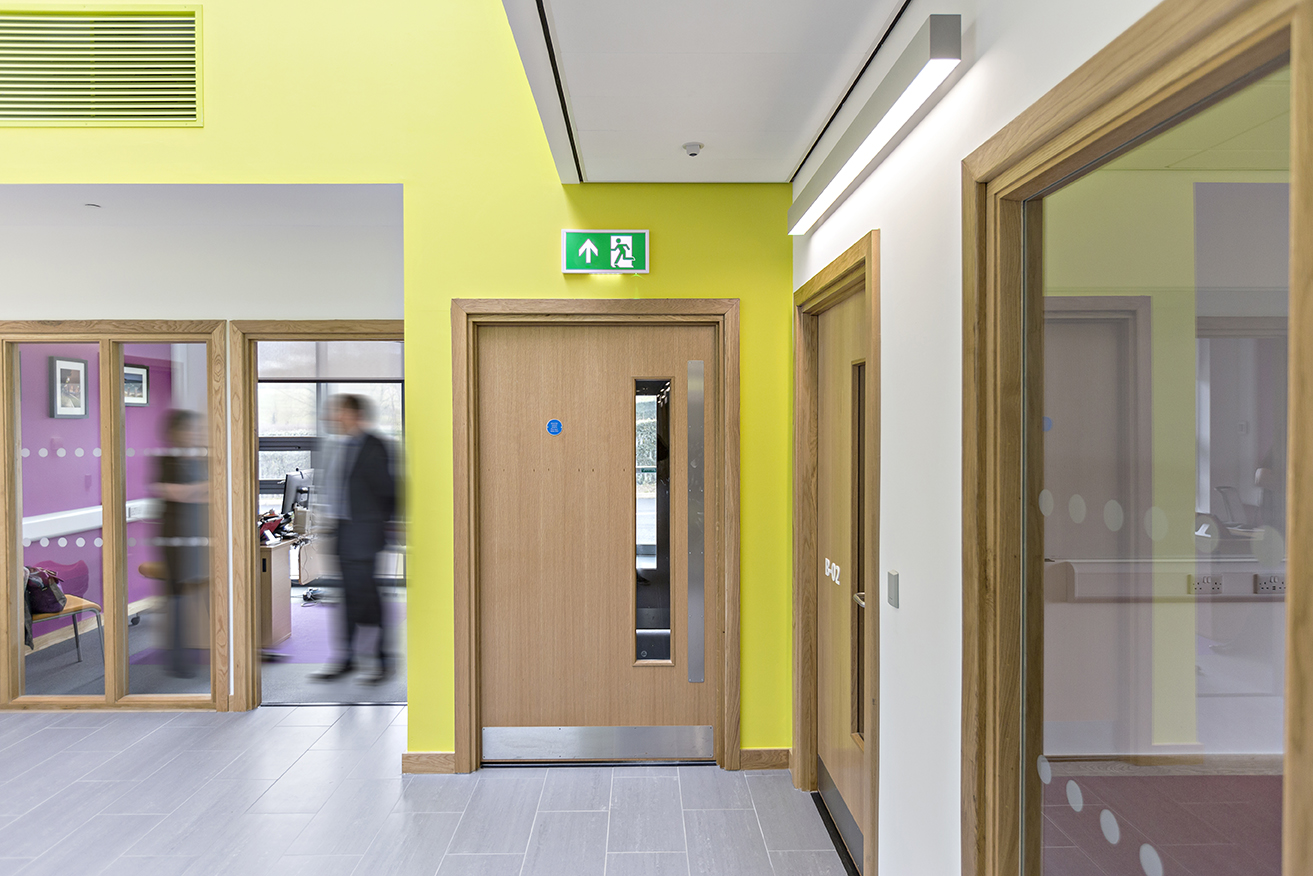
Emergency Lighting Systems
All internal public spaces and places of work require emergency lighting to ensure that buildings can be safely evacuated in the event of power failure. Such systems require regular testing and failure to correctly maintain an emergency lighting system can result in substantial penalties and even criminal liabilities should injuries occur during an incident where the lighting was not operational through negligence. There are numerous emergency lighting systems offering varying degrees of complexity, cost and ongoing maintenance, this article explores the most commonly available systems, their benefits and disadvantages.
It is important to begin by outlining the testing requirements for emergency lighting in order to fully understand the maintenance aspects of such systems and why the lighting industry has developed more advanced solutions to resolve these challenges:
BS 5266 is the emergency lighting standard which also dictates the testing requirements.
All emergency lighting should be subjected to a monthly functional test, this is to demonstrate that the luminaire operates correctly in emergency mode should the power supply fail.
All emergency lighting should be subjected to an annual duration test, this is to demonstrate that the battery is capable of operating for a period of three hours. Please note that the three hour duration is not a legal requirement, emergency lighting needs only provide one hour of duration to be legally compliant in most applications, however in the event that there is a brief power cut a three hour battery duration allows the building to be reoccupied immediately knowing that the batteries still contain sufficient charge for another evacuation should a second power cut occur. If all emergency lighting provided a duration of only one hour any power cut would mean that the building could not be reoccupied for a period of twenty four hours whilst the batteries recharge. In addition, some installations legally require a three hour duration, for example buildings such as hotels or other types of accommodation which cannot easily be evacuated immediately must offer a three hour duration of emergency lighting rather than one hour to comply. For this reason all emergency lighting in the UK is supplied and tested for three hours of emergency duration.
When emergency testing is undertaken a log book should be completed with the date and outcome of the test as well as any defects that need to be rectified, this log book may be requested by the fire officer during inspections and failure to provide complete and up to date records can result in substantial penalties. Any emergency lighting failures found during testing should be rectified promptly.
Emergency lighting system types
Standard Emergency
Standard emergency is the most commonly used and lowest cost of all the common emergency lighting systems on the market. The emergency test is undertaken manually by disconnecting the permanent live supply to the luminaire. Installations which operate a standard emergency lighting system often have key switches installed, these are dedicated switches to instigate the emergency lighting test and require a specialist key to operate them preventing unqualified personnel accidentally initiating the emergency lighting.
Inspection of the emergency luminaires then has to be undertaken by walking the site and ensuring all luminaires are operating in emergency mode and recording the start and end of the test to time the duration. The log book to record test results also has to be completed.
Advantages
- Standard emergency is the lowest cost of all the emergency lighting systems.
- The wiring is simple and does not require additional DALI wiring to carry any data.
Disadvantages
- Testing luminaires is labour intensive, the lower up front cost of the emergency luminaires can often be quickly offset by the additional costs of carrying out functional and duration testing.
- It may not be feasible to test and inspect a very high quantity of luminaires and accurately record the outcome making standard emergency systems impractical for large installations.
Want to know more about Emergency Lighting Systems?
For Sales and Technical Enquires call 01747 858100