Protec
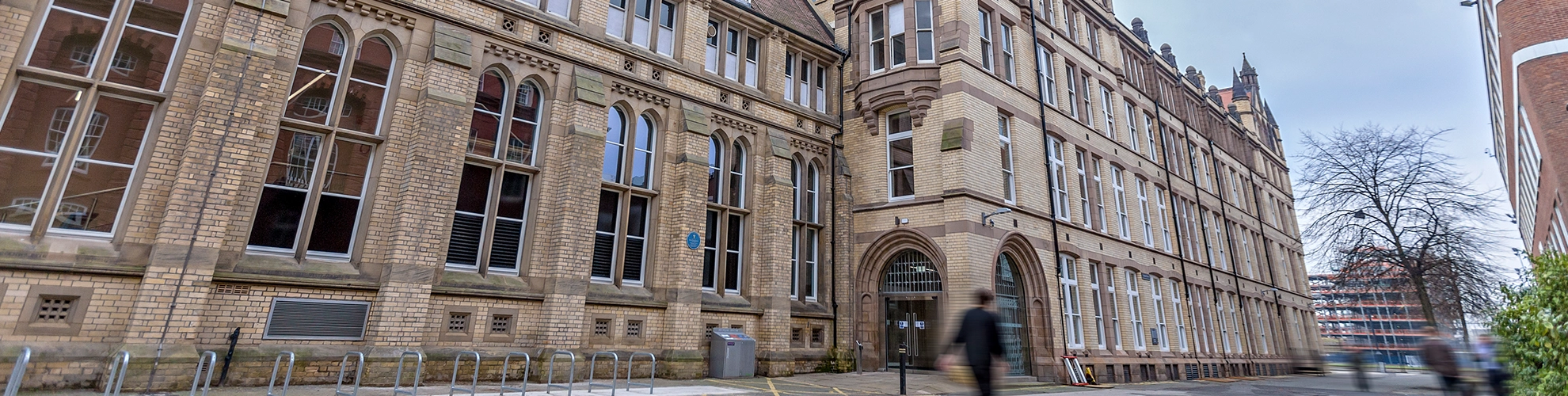
This leading University is renowned for its cutting-edge international research and has long-established a reputation for its world-class education and innovation, having ranked 34th in the world, eighth in Europe, and sixth in the UK in the ‘Academic Ranking of World Universities 2018’, as well as seventh in Europe in the 2018 Reuters ‘Top 100 Most Innovative Universities.’
A resounding reflection of their commitment to innovative solutions, the University have recently undertaken one of the most significant investments in facilities ever carried out by a UK University. Having devised a comprehensive 10-year plan, they intend to transform their campus and create first-class facilities for students, staff, and visitors, also supporting their goals to further their global reputation.
In 2016, as part of this ten-year Campus Masterplan, University of Manchester sought to carry out a complete refurbishment of one of their Grade II listed buildings, the Coupland 3, located on the rear quadrangle of their historical group
of University buildings. Coupland 3 was originally home of Manchester School of Medicine but had been vacant for a considerable time. With a budget of 33 million pounds, the University hoped to develop a new home in the Coupland 3, to house their School of Law, School of Dentistry, Faculty of Humanities administration, Directorate for the Student Experience and their postgraduate hub.
The development was to feature a predominantly open-plan design, allowing for plenty of natural light and a restoration of the impressive vaulted ceilings, lost over the years through various alterations and additions made to the building. The implementation of energy efficient LED lighting solutions would also play a vital role in the University’s Sustainable Resource Plan, a key part of which focuses on upgrading infrastructure and installing new technologies to reduce energy consumption and substantially improve overall sustainability while capitalising on cost-savings.
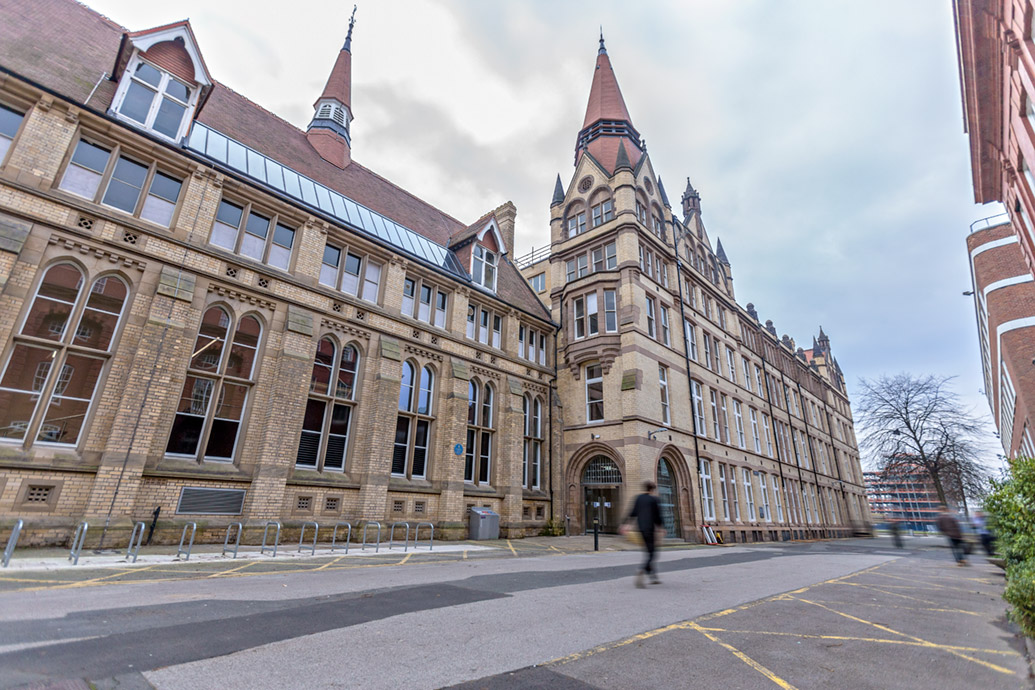
The consultant for the project was Capita, the Main Contractor was Graham Construction, and the electrical contractor was Vaughan Engineering. Architects Wilson Mason first established the design and laid down the requirements. Once the overview was complete, Dextra Lighting attended the site to survey the existing structures and prepare to submit our tender for the project.
Being a Grade II listed building, extensive care was necessary and astute calculations made per stringent building regulations. The varied ceiling heights and types also posed a unique challenge, as in some instances we would need to light from walls and fixed point beams.
We were delighted to hear our tender was successful and that we’d won the job. Dextra Lighting were deemed an excellent fit for the client, as we were able to meet the architect’s requirements for the design while also falling in line with the budget requirements.
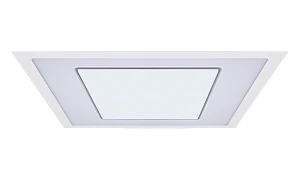
Dextra opted to install 92 of the Protec for the circulation spaces and toilets. The Protec was considered ideal for these areas due to their powerful lumen output, offering up to 3000lm, their impressive energy cost savings, and their range of emergency and dimming options. These exceptional LED lights are also compatible with a variety of Dextra sensors, allowing further energy savings through the use of intuitive presence control and daylight regulation.
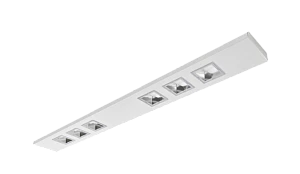
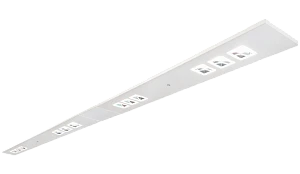
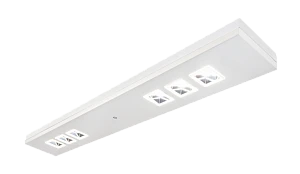
To optimise the circulation spaces and open-plan offices, Dextra chose to install a range of Recessed Runway lighting, Continuous Recessed Runway lighting, Runway Wall lighting, and Surface and Suspended Runway lighting. These particular lighting solutions offer an outstanding, versatile option in areas where lighting is required to fulfil both architectural and practical purposes. With an extensive range of bespoke lengths and lumen outputs able to be designed to suit each unique space, the slim-line, anodised aluminium-housed Runway range allows any interior to be aesthetically and efficiently enhanced. A further flexible advantage is the extensive range of integral emergency, white tunable and dimming options available.
In addition to the open-plan offices and circulation spaces, Continuous Surface and Suspended Runway lighting were also installed in the Lecture halls, totalling to 103 used. The team paid particular attention to the layout of the lighting concerning the structure of the building, with some units being wall mounted, and the Coupland 3’s G110 Room requiring two bespoke large square arrangements.
We implemented 14 MOD Office luminaires in the offices in place of the existing fluorescent recessed lighting. A PBK kit was required to allow safe and secure mounting of these lights into the plasterboard ceiling. The MOD Office is designed specifically for applications where monitors are used, making it ideal for offices. MOD Office lighting offers not only superb energy efficiency and low maintenance but also comes with integral presence and daylight sensors as well as dimming and emergency options, saving even more energy and offering a remarkable return on investment.
162 Rubix Suspended lights were installed in the circulation spaces, open-plan offices, and seminar rooms, and 10 Rubix Surface Linear lights were also supplied for the seminar room, used in conjunction with the Rubix Suspended lighting and surface mounted where bulkheads were put in. The Rubix range offers glare compliance to BSEN12464 and UGR19 or below, making it ideal for use in applications such as classrooms, offices and corporate or seminar rooms. Optional integral sensors, dimming and emergency options and lumen outputs available with the Rubix Surface Linear and Suspended range allow performance and function to be tailored to suit each specific application.
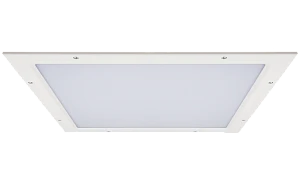
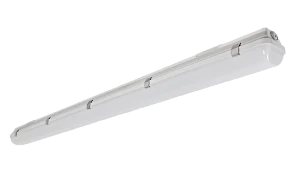
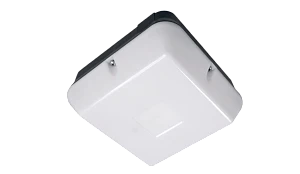
A long-standing, leading member of the Dextra Lighting product range, the IP65 rated Impervia luminaire offers durable, recessed lighting ideal for more arduous applications, such as labs, where luminaires are likely to be subjected to dust, dirt, and water. For this reason, we installed 30 IMPR lights in the laboratories in Coupland 3. For similar reasons, we also chose to mount 107 Hydra and 43 Amenity Plus in the Plant Room Area. The Hydra is ideal for industrial applications as it’s suitable for applications where temperature ranges from -20°C to +25°C., and offers protection from dirt and dust ingress, which is particularly necessary for areas such as plant rooms which are often difficult to access. The Amenity Plus is sealed to IP65, making it suitable to a range of both internal and external applications, including plant rooms and storage rooms. This exceptionally functional lighting offers performance similar to that of fluorescent luminaires but with far lower energy output and significantly lower maintenance.
A mainstay in the Dextra Lighting range, the Graduate is ideal for retrofit applications, enabling smart sensor control without the cost of modifying external wiring. For this reason, it was considered the best option for the Back of House area, and 4 Graduate were installed here.
The renovation and restoration of the Coupland 3 was an enormous success, completed to time and comfortably meeting the University’s £33m budget. This was only achievable as a result of meticulous planning and careful consideration for the unique structure of the building, along with diligent compliance to Grade-II listed building restrictions. Calling on a wide range of Dextra LED Lighting solutions which are specially tailored to the application and design of each room, it allowed us to optimise both sustainability and aesthetic appeal throughout while keeping maintenance to a minimum, and maximising energy savings wherever possible.